Written By: Henry Vanicek
November 9, 2026
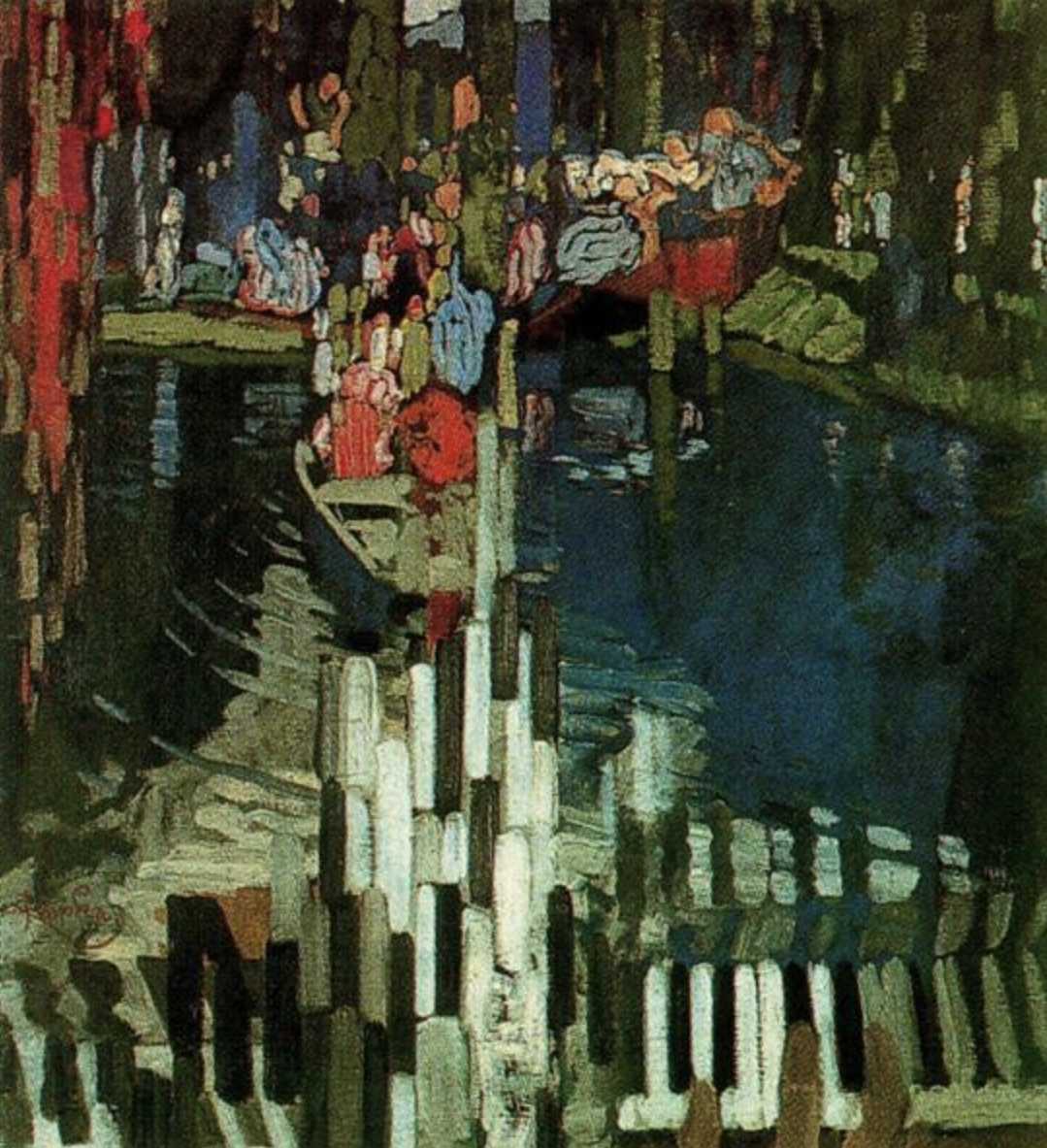
Piano Keys Lake - František Kupka (1909)
This week, as many of my weeks go, I had vowed to tirelessly study my biology and physics courses. This plan started off going well, and I began to slowly understand our small place in this vast world. Unfortunately (just before I understood the universe), all my scholarly pursuits were discarded for a stroke of inspiration to song write. The work I had so recently needed to do was lost in the pandemonium of my own music. But, my life didn’t wait for me. For every hour I spent writing lyrics, I reluctantly spent another sat in front of a dimly lit computer late into the night. Music at that time gave me hope; it made me dream for a day when my troubles would be in the past. Lifegiving hope.
It can feel hopeless to have a critical treatment not be successful. For those who have experienced a return of prostate cancer after already undergoing radiation therapy, the options can seem rather grim. Medical experts resort to using secondary treatments known under the umbrella term, ‘salvage therapy.’ High-dose-rate brachytherapy (HDR) is one of these alternative salvage methods: and it’s a very different tune to the established melody.
Unlike many other secondary treatments, HDR is a strong dosage of radiation delivered directly to the cancerous area over a short period of time. In the ideal outcome, this would kill returning cancer cells while protecting nearby essential tissues. Until recently, many of the secondary-use risks associated with focal HDR had not been investigated. Is it safe?
F-SHARP, a study led by Abhishek Solanki (MD, MS), was exactly designed to answer this question. Using HDR treatments in men with returning prostate cancer, the researchers monitored for any signs of physical stress and cancer development. Of the sixty-two patients, Solanki et al. only observed two severe complications; both were after the initial three-month period. The data collected remained promising. Over the next three years, over half of the patients remained cancer progression free.
From the initial success, an exploratory question arose: can genetics predict the correct treatment to use? 31 patients provided researchers with samples of their cancer tissue for analysis of activated genes. A genomic classifier, a sort of predictor of how aggressive the cancer is, produced compelling results. Of the patients predicted to have high cancer susceptibility, all experienced biochemical, local, and metastatic recurrence. Results like this may indicate a future where varying degrees of cancer aggressiveness can be addressed with the right level of treatment. Though currently preliminary, this stands as an interesting point for future research.
For many, the further development of HDR is the return to a leitmotif of renewal. When researchers can strike the chord just right, perhaps a few more of us will continue to contribute to the song of the universe. If science is our instrument, do you hear the music?
Source(s):
Solanki, A. A., Adams, W., Proudfoot, J. A., Baldea, K., Barkan, G. A., Block, A. M., Desai, N. B., Farooq, A., Folkert, M. R., Garant, A., Gorbonos, A., Gupta, G., Kang, H., Kelly, E., Kregel, S., Liauw, S. L., Luminais, C. K., Mysz, M., Quek, M. L., ... Harkenrider, M. M. (2026). Dose-escalated focal salvage high-dose-rate brachytherapy and genomic classifier risk stratification in radiorecurrent prostate cancer: The F-SHARP phase I/II clinical trial. Journal of Clinical Oncology. Advance online publication. https://doi.org/10.1200/JCO-25-02730
